
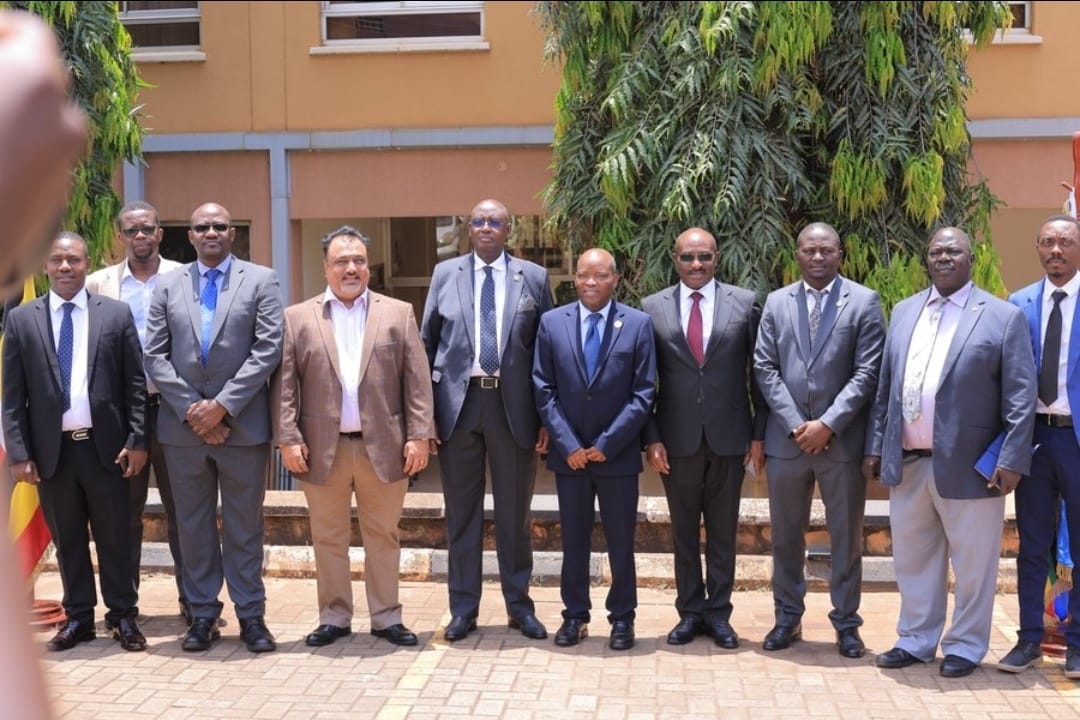
AFRICAN UNION KAMPALA MISSION ENDS WITH CALL ON UGANDA TO IMPLEMENT 100 DAY ACTION PLAN FOR CAADP.
Uganda Agriculture stakeholders have been urged to focus on pushing the recently launched100-Day Action Plan as Commissioner to accelerate implementation in priority areas including agricultural productivity, soil health, fertilizer access, climate resilience, youth employment, investment mobilization, and the blue economy. The call was made by commissioner for agriculture, rural development, blue economy and sustainable environment of the African Union Commission, His Excellency Moses Valakati during a three-day Kampala technical mission on caadp implementation.
The Commissioner said initiative is intended to create momentum and demonstrate practical actions that support the implementation of the new CAADP agenda.
“As part of these efforts, I have launched a rolling 100-Day Action Plan as Commissioner to accelerate implementation in priority areas including agricultural productivity, soil health, fertilizer access, climate resilience, youth employment, investment mobilization, and the blue economy. This initiative is intended to create momentum and demonstrate practical actions that support the implementation of the new CAADP agenda.” Said H.E Valakati.
The three-day mission included an inter-sectoral ministerial meeting where trade ministry, water and environment and agriculture convened together to discuss key aspects and commitments, a visit to National agriculture research organization and convening a high-level agriculture sector stakeholders forum.
The Commissioner highlighted that the new CAADP agenda calls for accelerated action to increase agricultural productivity, strengthen food and nutrition security, build resilience to climate and economic shocks, promote youth and women’s participation, increase investments in agrifood systems, and strengthen accountability and governance mechanisms.
“As the African Union Commission, we are fully committed to supporting Member States in implementing this new agenda. Our focus is to move beyond commitments and ensure effective implementation at national, regional, and continental levels “adds Commissioner Valakati.
Speaking at the interministerial convening Dr bright Rwamirama the state minister for Livestock at Uganda’s Agriculture Ministries, appreciated the African union commission Mission for visiting Uganda and further raising questions for discussions towards enabling Uganda to recommit to its Kampala declaration.
“The discussions held are both timely and strategic. They provide important policy guidance and reaffirmed Uganda’s commitment to agricultural transformation, food security, livestock development, environmental sustainability, rural development, and economic growth. Equally important, the discussions emphasized the need for stronger coordination across sectors, increased investment, enhanced accountability, and effective implementation” said Dr Bright Rwamirama
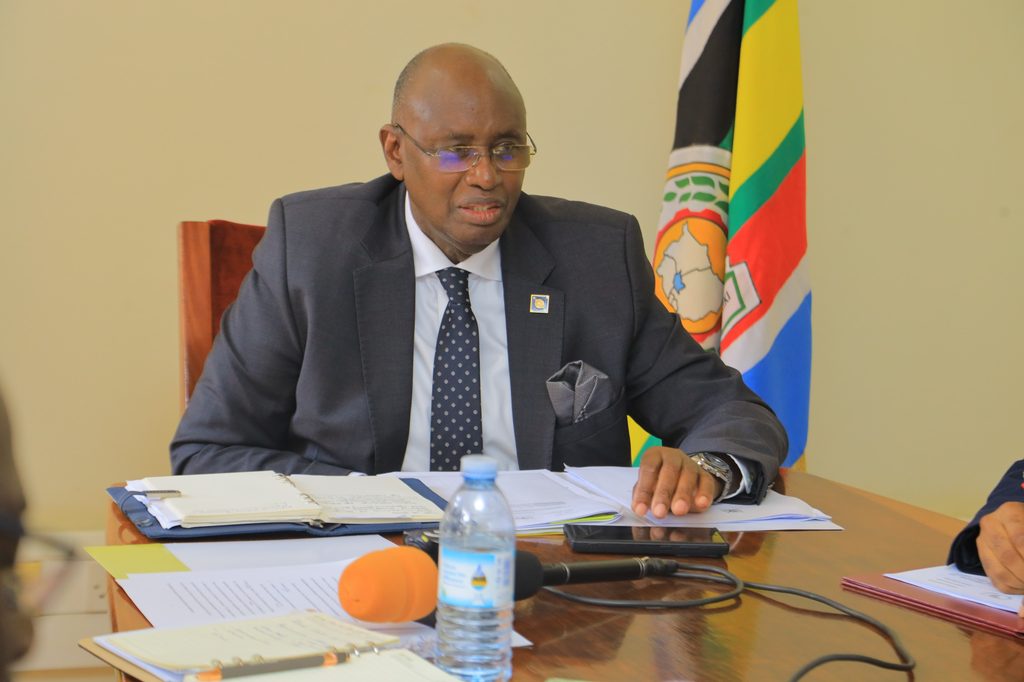
The minister said, the missions visit the visit reaffirmed that science, innovation, and research are fundamental pillars of agricultural transformation. Thus, a reminder that sustainable growth in the agricultural sector will depend on stronger linkages between research institutions, policymakers, extension services, farmers, agribusinesses, and investors.
“Our discussions today are taking place at a particularly important moment for Africa. Earlier this year, African Heads of State and Government adopted the Kampala CAADP Declaration and the CAADP Strategy and Action Plan 2026-2035, establishing a new vision for transforming Africa’s agrifood systems into resilient, inclusive, sustainable, and competitive drivers of economic growth and prosperity.” adds Rwamirama
Hon. Sanjay Tanna, Minister of Trade, Industry and Cooperatives, highlighted agro-processing, value addition, branding and market access as critical to sustaining Uganda’s agricultural growth and expanding its presence beyond the East African market. He pointed to opportunities in processing milk, coffee, tea, honey, shea butter, fruits and other value chains, stressing the need to move from production to globally competitive products.
The second day of the Commission High-Level Country Engagement Mission on the CAADP Kampala Agenda , brought together Government institutions, the private sector, farmers’ organisations, research institutions, development partners and other stakeholders to examine what is working, what needs to change, what can be scaled, and where investment can accelerate Uganda’s agrifood transformation. From policy commitments to practical action, the focus is on building productive, resilient and competitive food systems that create jobs, expand markets and strengthen food security. Uganda and the African Union: turning continental ambition into results.
Speaking at the High-Level Policy Dialogue on the domestication and implementation of the CAADP Kampala Declaration, the agriculture permanent secretary Major General David kyomukama Kasura extended his sincere appreciation to the Mission for enabling the convening of Technical Meetings and Inter-Ministerial Sessions. Saying it was a reflection of our shared commitment to accelerating agricultural transformation, strengthening food security, enhancing resilience, and creating sustainable economic opportunities for the people of Uganda and the African continent.
“The guidance provided by Ministers has created a strong foundation for our discussions today. It is now our responsibility, as technical experts, practitioners, researchers, development partners, and private sector actors, to translate that vision into practical actions, bankable programmes, and measurable results.” Add the permanent secretary
Representing Donor Agriculture group, Dr Armine Juergenliemk a senior Agriculture Specialist, Agriculture and food global practice middle east and north Africa region at the world bank, highlighted the scale of ongoing support, including Uganda’s US$354.7 million Climate Smart Agriculture Transformation Project, supporting climate-smart research, seed systems, market linkages, resilience and inclusive agricultural development. For the African Union Commission, the priority is equally clear: align national action with the CAADP Strategy and Action Plan 2026–2035, mobilise investment, strengthen coordination and ensure measurable results.
Grace Musimami the Executive director Agriculture sector Network Uganda appreciated the mission and said the participation of private sector and civil society organizations at the high-level meeting was a clear indicator that no one is being left behind.
“As sector actors, CAADP is not just government commitment but a broader framework for all of us in Africa, we need to quickly create awareness on the need to track private financer into the sector, for long sector players have held the government responsible for not being on track in the Africa biennial review reports, but it is time we tracked private commitments.” Said Musimami
He further pledged ASENET support and commitment to get all private stakeholders sign up a charter to commit to implementation of the CAADP Process. I therefore encourage all stakeholders to engage actively and constructively in our discussions. Let us focus on practical recommendations, scalable innovations, investment opportunities, and implementation mechanisms that can accelerate Uganda’s agricultural transformation while contributing to the broader goals of CAADP and Agenda 2063.
The African Union Commission plans:
- Support Member States in aligning national agricultural investment plans with the new CAADP Strategy and Action Plan 2026-2035.
- Strengthen technical support for the implementation of agrifood systems transformation programmes across agriculture, livestock, fisheries, forestry, and the blue economy.
- Promote greater investment in agricultural research, innovation, technology transfer, and digital transformation.
- Mobilize partnerships with development partners, financial institutions, and the private sector to increase financing for agriculture and rural development.
- Strengthen accountability, monitoring, and knowledge-sharing mechanisms to ensure that commitments translate into measurable impact.
- Support initiatives that enhance resilience to climate change, improve food security, promote sustainable resource management, and create jobs for women and youth.