
Uganda Agricultuire Stakeholders Call for Urgent Actualization of the National Extension Coalition
Lona Jackline
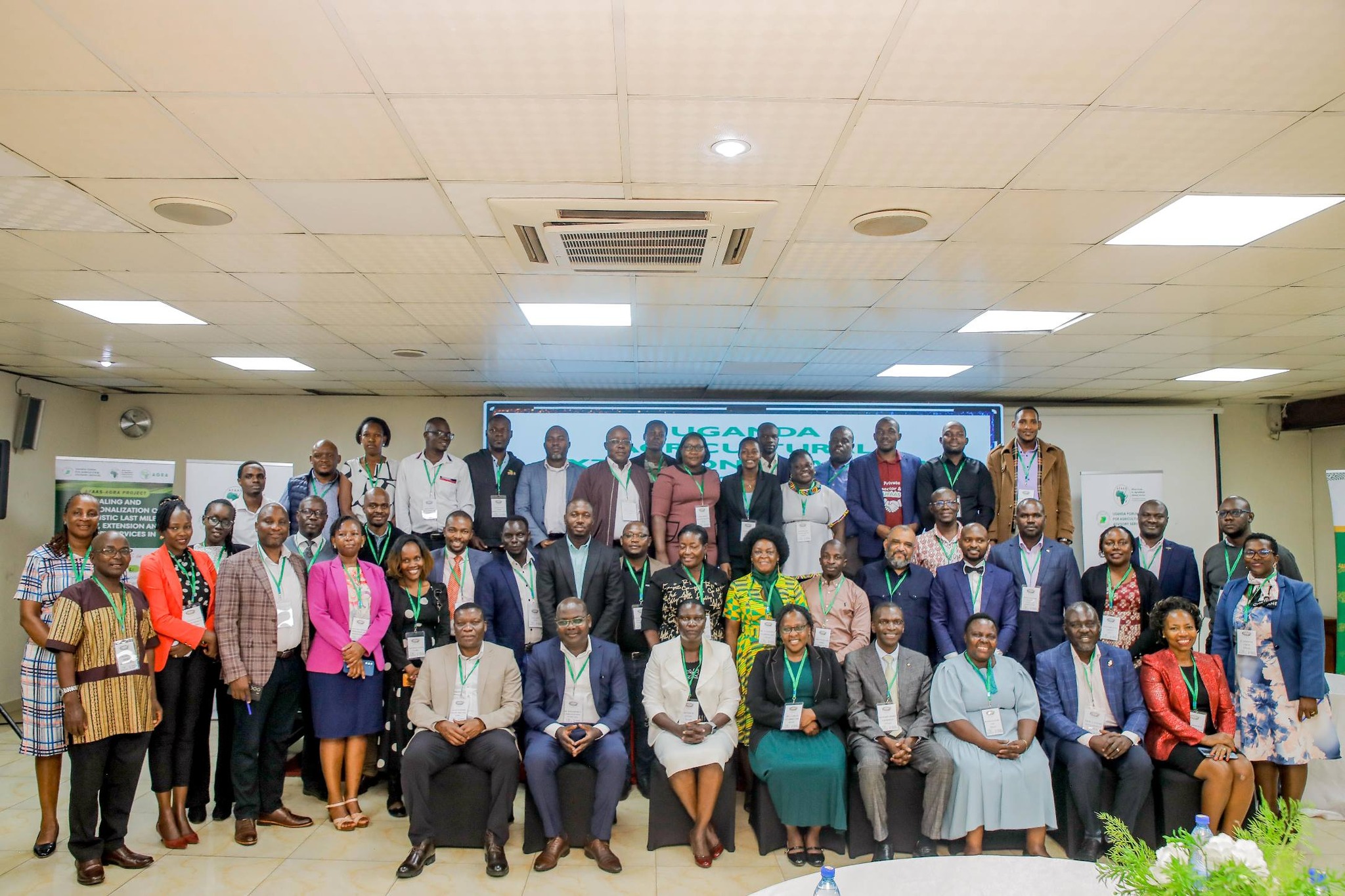
Agriculture Stakeholders have agreed to fast-track the actualisation of the agricultural extension coalition in Uganda, during a national agriculture extension roundtable meeting hosted by Uganda Forum for agriculture advisory services with support from AGRA. It was observed that the coalition was the pathway to a stronger extension sector.
Speaking at the one-day Extension Dialogue, Dr Muhammed Quresh a senior technical manager at AGRA emphasised the importance of collective action and genuine partnerships in transforming agricultural extension systems. “Uganda’s extension coalition is part of a broader continental vision aimed at creating a unified extension ecosystem that enables African farmers to access timely, inclusive, and high-quality advisory services. So learning and coordination among all actors across the food systems value chain is essential for scaling impact and avoiding fragmented efforts.” Said Dr Qureshi.
Dr. Quresh further highlighted the need for self-regulation within extension coalitions to create space for government leadership while leveraging the private sector and development partners as co-pilots in scaling up services. He encouraged stronger policy advocacy, structured government dialogue, and sustainable financing mechanisms to guide investment priorities in extension services. He also called for a shift in focus from simply increasing the number of extension workers to improving the quality and relevance of services delivered to farmers, particularly at the last mile. He further highlighted the continental target of reaching 28 million farmers through coordinated national efforts.
Giving opening remarks,Dr. Lilian Lihasi kidula, the Executive Director of the African Forum for Agricultural Advisory Services (AFAAS), questioned why many African farmers continue to face persistent challenges despite significant investments in research, innovation, and extension. She attributed this gap to widespread silos and fragmentation among research institutions, policymakers, extension services, the private sector, and farmers themselves.
Dr. Lihasi further called for a mindset shift—from linear models of research-to-extension-to-farmer, to a collaborative ecosystem approach where all actors co-create solutions with farmers. “We need to reduce duplication, pool limited resources, and work with a common voice at the community level. She also highlighted the importance of adaptive learning, farmer feedback, digital tools, youth involvement, and inclusive participation to build resilient extension systems capable of responding to climate and economic shocks. “Said Dr Lihasi
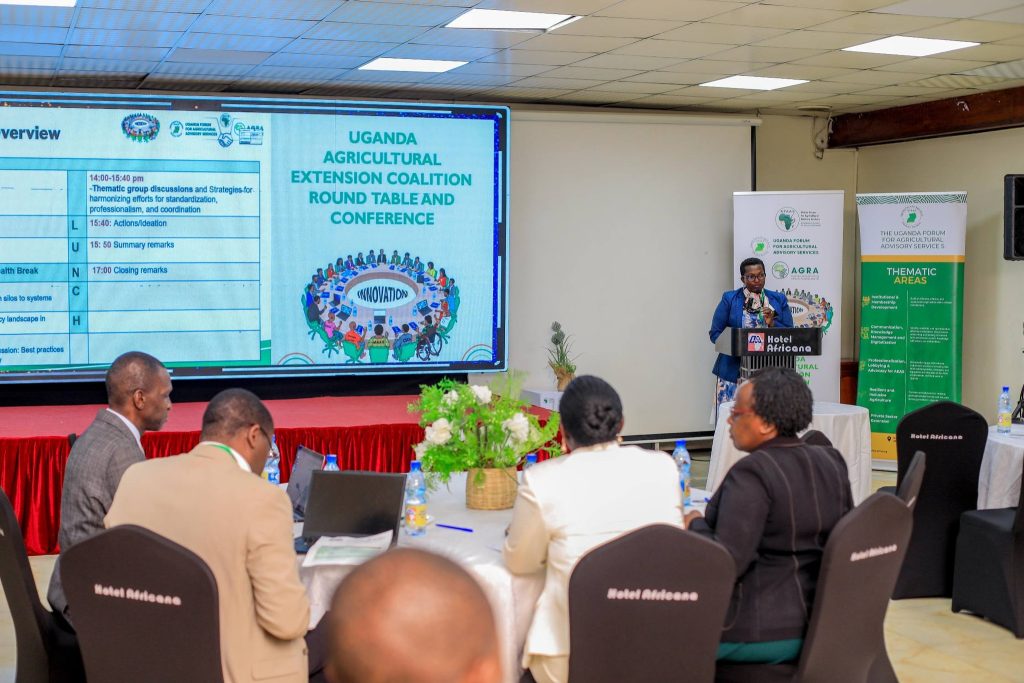
Representing the Ministry of Agriculture, Animal Industry and Fisheries (MAAIF), the Assistant Commissioner for Agricultural Extension Dr Patience Rwamigisa, reaffirmed the government’s commitment to strengthening extension services under the National Agricultural Extension Services (NAES) and National Agricultural Extension Board (NAEB) frameworks, which align with continental and global initiatives such as CAADP and the Kampala Declaration 2025.
“There is a need to address root causes of challenges within the extension system through a pluralistic approach, while improving functionality and coordination among actors. I am worried that we have short project funding cycles, longer-term investments of five to six years would allow for proper implementation, evaluation, and sustainable impact” adds Rwamigisa.
The Commissioner further underscored the importance of transparent recruitment systems, youth inclusion, and revitalizing the weakening research–extension–farmer linkage. Participants were also informed about the Ministry’s development of an electronic extension system to complement existing human resources.
Contributing to the discussion, Dr. Joshua Zimbe, Principal Dairy Production Officer at MAAIF, described the roundtable as a critical platform for networking, reflection, and honest dialogue on unfinished business within Uganda’s extension delivery system. He noted that the goal of extension services is to transform both subsistence and commercial farmers in line with the government’s agro-industrialization agenda.
Dr. Zimbe emphasized that farmers today require innovation rather than technology alone, calling on extension actors to transition into facilitators of innovation processes through teamwork and collaboration. He urged participants to operationalize the outcomes of the roundtable and ensure that such dialogues are sustained and scaled from local to national, regional, and continental levels.
The dialogue concluded with a shared commitment among stakeholders to break silos, strengthen coordination, and deliver inclusive, high-quality extension services that improve productivity, incomes, and resilience of smallholder farmers. Participants agreed that no single institution can drive change alone, and that collective, adaptive, and farmer-centred action is essential for transforming Uganda’s agricultural sector and contributing to food systems transformation across Africa